
Fertilizers and agrochemicals
Fertilizer and agrochemical registration in Kazakhstan
We take fertilizers and agrochemicals to the Kazakhstan market: agrochemical trials, registration dossier, declarations of conformity and the documentation needed to import. We work with manufacturers from China, the EU, Türkiye and Russia.
- Mineral, organic and organo-mineral fertilizers
- Micronutrients, chelates and biostimulants
- Laboratory and field efficacy trials
- Import documentation and access to subsidy lists
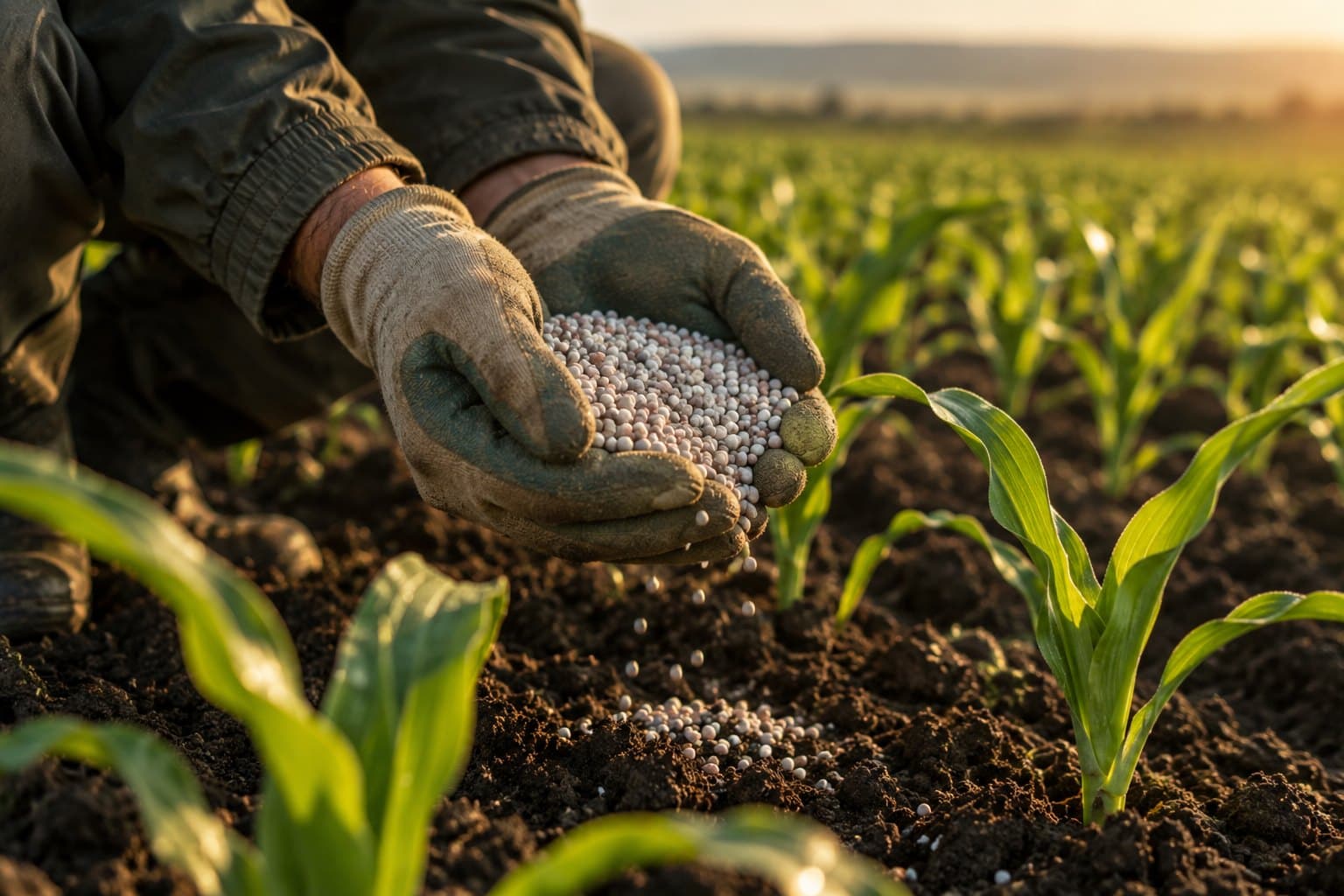
Why a fertilizer needs registration
To be imported, sold and applied lawfully in Kazakhstan, a fertilizer must go through the applicable approval procedure and appear on the list of products approved for use. Without it the product will not clear customs, will not qualify for tenders, and will not count towards subsidy programmes — and subsidy eligibility is often what decides whether a distributor takes your product or a competitor's.
The harder part is getting the category right. Biostimulants, chelate complexes and products sitting on the line between fertilizer and plant protection product follow different procedures, with different depths of testing and different timelines. We start with classification and only then build the route: a mistake here costs more than everything that follows.
Services
Products we register
From straight mineral fertilizers to complex liquid formulations.
Fertilizers
- Mineral: nitrogen, phosphate, potash, NPK compounds
- Organic and organo-mineral
- Liquid complex fertilizers and UAN
- Water-soluble fertilizers for fertigation
- Soil amendments and liming materials
Speciality agrochemicals
- Micronutrients and chelated trace elements
- Biostimulants and anti-stress products
- Humic and fulvic acid products
- Amino acid and seaweed-based complexes
- Inoculants and microbial products
Step
How fertilizer registration works
From product classification to the right to sell.
Step 1
Classification and strategy
We determine the product category from its composition and claimed action, the applicable approval procedure and the scope of trials. We also decide early whether the product needs to reach subsidy lists — that changes the documentation requirements.
Step 2
Dossier and technical documentation
We prepare the composition and specification, safety data sheet, test reports for nutrient content and impurities, the manufacturer's technical specification, and the draft label and use recommendations.
Step 3
Trials and conformity assessment
We arrange agrochemical and field efficacy trials on the declared crops, laboratory analysis of safety parameters, and issue the declaration of conformity with the applicable technical regulations.
Step 4
Approval and market entry
We see the product through to the approved list, prepare the package for import shipments, and hand your distributor a file that passes inspection without questions.
What we need from the manufacturer
The set is finalised once the product has been classified.
- Full composition with mass fractions of nutrients
- Specification and certificate of analysis (CoA) for the batch
- Safety data sheet (SDS)
- Heavy metals and toxic impurity data
- Any existing efficacy trial results
- Use recommendations: crops, rates, timing, application method
- Draft label and packaging description
- Manufacturer's corporate documents and power of attorney
If the product is already registered in the EU, China or Russia, foreign test reports are accepted as part of the evidence base — there is no need to repeat them.
Indicative timelines
Driven by the product category and by whether field trials are required.
| Classification and strategy | 1–2 weeks | Once the composition and manufacturer documents are received |
|---|---|---|
| Dossier preparation | 3–6 weeks | Translation, legalisation, alignment with Kazakhstan requirements |
| Laboratory testing | 2–6 weeks | Composition and safety parameters |
| Field efficacy trials | from 1 season | Not required for every product category |
As with pesticides, the field component is tied to the growing season — that is the main planning constraint.
What the service covers
We take the product from formulation to the distributor's shelf.
Product classification
We settle the category and procedure — the cheapest way to avoid losing a season on the wrong route.
Documentation
Composition, specification, SDS, technical specification, label and use recommendations.
Testing
Laboratory analysis and field efficacy work at accredited organisations.
Conformity
We issue declarations of conformity and support the conformity assessment process.
Import
We prepare the import documentation and clear up questions at customs.
Subsidies
We help the product reach subsidy lists — a direct commercial argument for distributors.
FAQ
Fertilizer registration FAQ
The essentials.
How does fertilizer registration differ from pesticide registration?
In the depth of the evidence base. A pesticide requires a full toxicology and ecotoxicology dossier plus registration trials for biological efficacy. A fertilizer is assessed primarily on composition, nutrient content, impurity safety and agrochemical efficacy — a noticeably lighter and shorter procedure. However, if the product claims a protective or regulatory action, it may fall into the plant protection product category with all the requirements that brings.
Does a biostimulant need registration?
Almost always, and this is the category where classification goes wrong most often. Biostimulants, humic products and amino acid complexes follow different procedures depending on composition and claimed action. We determine the category from the formulation and from what you intend to put on the label — the wording of your claims directly affects the route.
Can a trial shipment be imported before registration?
Import of limited quantities for trials and demonstration plots is authorised separately and is standard practice during a product launch. Commercial quantities cannot be imported before the approval procedure is complete.
What does being on a subsidy list achieve?
The state reimburses farmers part of the cost of listed fertilizers. In practice that means a farm will choose the subsidised product where quality is comparable. For an importer this is not a formality but a condition of market entry, so the documentation requirements are worth building in from the start rather than after registration.
How much does fertilizer registration cost?
The quote depends on the product category, the set of trials and the number of crops in the use recommendations. Once the product is classified we give a fixed price and timeline before work begins.
Services
Related services
These usually run together in a single project.
Pesticide registration
Herbicides, fungicides, insecticides, seed treatments, desiccants and adjuvants — from trial strategy to listing in the state register.
Learn moreFeed additives
Premixes, concentrates, enzyme and yeast additives, cattle supplements — registration and import support.
Learn moreBusiness plan and feasibility study
Business plans for banks and investors, financial models, feasibility studies, subsidy applications and representation before state bodies.
Learn more
Send us the formulation
From the composition and the claimed action we will determine the category, the procedure and the timeline — the first and most important step.
Mon–Fri 09:00 — 18:00